Transcript for Getting 'Ghosted' on Lawn Care Can Be Costly
America" on the lookout. This morning, we're focusing on ghosting. Where customers claim that workers pretend to do work they never did. ABC's linsey Davis has the story on how people say they're being ripped off. Reporter: Across the country, homeowners distraught that the grass isn't always greener when lawn care service allegedly goes wrong, turning their green glory into a bound https://www.amazon.com/Best-Sellers-Patio-Lawn-Garden-Sprinklers/zgbs/lawn-garden/553974 disgrace, some taking their complaints to youtube. This was a mistake. Reporter: But it's not just complaints about work being done, sometimes it's about no work being done at all and still Biddle for their service. What some called "Ghosting." This area looks completely Sprinkler System Mckinney dead to me. Reporter: This Florida resident's surveillance cameras were rolling when a trugreen Sprinkler System Mckinney pest control worker showed up. Maintain my lawn and they violated my trust. Reporter: Watch. The worker returns to his truck and before leaving drops the flag on the grass before providing any work. He's not allow. Watch this 2010 instant caught on tape. A Lauren care service worker leavi ng a flag on the lawn all for nothing. In 2014, the better business bureau received more than 5,000 complaints for a variety of reasons. Average customer spent $700 annually. Including upkeep visits like his cameras recorded. They fired the employee and refund ed the customer. They issued a statement -- he did some green after all, back in his pocket. For those who are seeing red because they don't have grass that looks like this, grass that green the better business bureau say it's tough to prove ghosting, if you can, they recommend installing a camera. Lara. Linsey Davis, thank you so much. Coming up on "Good morning America" -- sunny days ahead for
This transcript has been automatically generated and may not be 100% accurate.
Your home, propert y and furniture are treated as if they were our own. It's that simple.
We check-in.
Your locally owned and operated team will stay in touch every step of the way -- from the first consultation until you're enjoying the finished product.
We arrive on time.
Your time is important. We will always offer superior services that meet your schedule - and your budget.
A home with a garden of drought-tolerant plants is seen in Beverly Hills, April 8, 2015. California's cities and towns http://www.bhg.com/gardening/ would be required to cut their water usage by up to 35 percent or face steep fines under proposed new rules released Tuesday, the...more
Reuters /
Wednesday, April 08, 2015
A home with a garden of https://www.youtube.com/watch?v=JzdF7T-Gf6A drought-tolerant plants is seen in Beverly Hills, April 8, 2015. California's cities and towns would be required to https://www.youtube.com/watch?v=JzdF7T-Gf6A cut their water usage by up to 35 percent or face steep fines under proposed new rules released Tuesday, the state's first-ever mandatory cutbacks in urban water use amid ongoing drought.
Students at Poland's School of Form have developed a robotic chef
Robot creates 3D-printed cookies in almost any shape imaginable
Electrolux Design Lab unearths new concepts in robotics and bio-mimicry
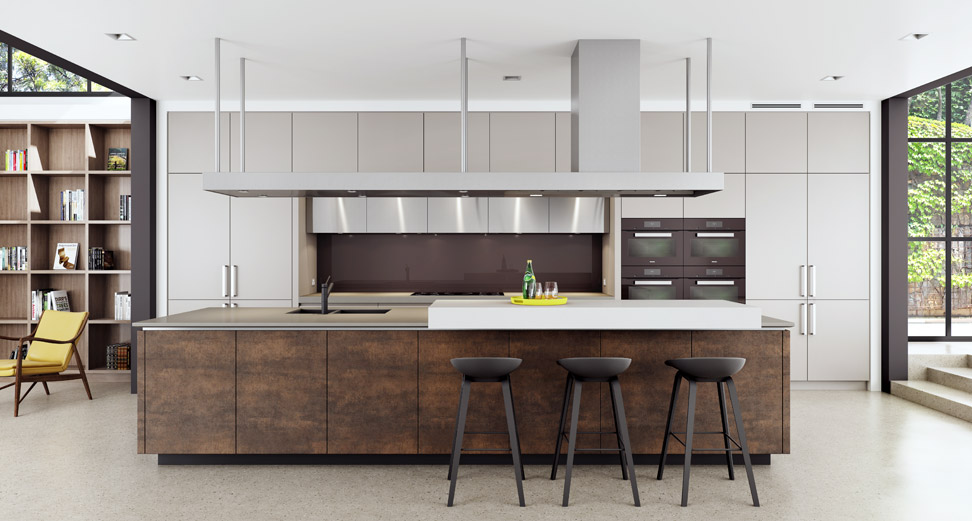
(CNN) -- Your cooking partner is a robot, your fridge can talk, and your plate is your own personal dietician. Oh, and for a laugh you occasionally have a cook-off with a famous holographic chef.
This may sound like a scene from 1960s sci-fi cartoon The Jetsons, but the kitchens in coming decades may not be so far off those envisioned by futurologists.
Today, a number of significant developments in culinary tech are happening in the field of robotics. CNN's Blueprint team caught up with a group of design students in Poland who recently programmed an industrial robot -- usually tasked with building cars -- to cook.
Read more: Making gourmet meals out of ma ggots
"Our project is called 'Let's cook the future' and we try to cook with robots -- we had a robot that initially was made just to be in factories and make cars and we tried to treat it as a human and put it in the kitchen." Says Barbara Best Remodeling Houston Dzaman, one of the students involved in the project.
The 'Let's cook the future' robot "prints" cookies three-dimensionally, building them up layer by layer in almost any shape you could imagine.
Dorota Kabala, an industrial designer working alongside the students says that the project looks towards a future where people can make dishes that are only limited by their imagination. "The problem we are addressing in this project is the need for personalization of production ... at the moment we can observe that people need more personalization, more customization of products than before and now it's possible."
Marek Cecula, a respected Polish designer, ceramicist and visiting professor at the Royal College of Art, London, says that he was "amazed" by the students' robot chef but felt that "we simply don't know where this is going ... How will we relate to objects made completely by a machine? How will these objects relate to our emotions? Where will the relationship between person and object be when the object is made by a machine?"
Read: edible wrapping could wipe out waste
The introduction of robots into the home is not new, of course. Many of us already live with electronics that have robotic components, such as self-cleaning ovens, single-touch microwaves that automatically adjust to the food you have put in them, and fridges that scan used-by dates.
The trend for robots to perform unskilled restaurant jobs has also led to robotic noodle slicers and mechanical waiters, though so far many are mere gimmicks rather than genuine technological solutions.
Thomas Johansson, Desi gn Director at Electrolux, says that he thinks there is a place for robots in the kitchen: "I think kitchen robots could potentially take over some of the common jobs that are repetitive or difficult to do ... I think you could take away some of the boring chores and spend your time doing something more interesting."
Away from robotics, Electrolux has been exploring the creative fringe of kitchen design with its annual Design Lab competition. The company recently announced the semi-finalists for 2013, which include a 3-D food printer and an appliance that calculates the nutritional values, possible toxins and freshness of your food before you start cooking.
Read: Bionic fashion, hot wearable tech
Johansson says the range of issues being tackled by students in the competition is fascinating in itself: "A lot of the students are addressing issues like wellbeing, robotics, bio-mimicry, wearable devices, air purification, and also using smart phones and tablets as r emote controls.
And then there are the issues about food diagnostics, which are especially interesting in light of the horse meat scandal. People are no longer that concerned about what frying pan they use, but what is in the frying pan. Knowing what it is that you are eating is very important."
With work being done in almost every field of home design, it is likely that the kitchen of the future will look significantly different to how it does today. As the old saying goes, the kitchen will always be the heart of the home -- but increasingly that heart is coming to resemble a Best Remodeling pacemaker.
TORONTO As climate change makes longer, drier summers a reality in many parts of the world, a new trend in landscaping is taking root in Canada.
In Toronto, where precipitation levels were 52 percent below the seasonal average over the past six months, according to government data, residents are trading in their manicured lawns for environmentally friendly organic landscapes.
"Irrigation is a huge issue as water is such a valuable resource," said Claire Suo-Cockerton of landscaping company Aesthetic Earthworks. "We are trying to plant material that is more appropriate today in our climate."
Organic landscapers use drought resistant plants and shrubs native to the region, which encourage the development micro-organisms in the soil. This attracts birds and insects to act as natural pest and disease control.
A well-managed organic landscape is self-sustaining, whereas a traditional yard needs to be watered at least onc e per week, Suo-Cockerton said.
"It's a drastic lifestyle change for those who incorporate it in their homes," she added.
But the change may be a bit too drastic for average homeowner.
Kevin MacDonald, operations manager of Humber Nurseries near Toronto, said he hasn't seen an increase in the sale of native plants and shrubs. He said the downside to native plants is they are more susceptible to native insects.
"By planting a cultivated variety, that is non-native, you may not end up with diseases and insect problems, simply because the diseases and insects that would traditionally attack that plant are not found in the new location," he said.
Still, the main reason why traditional gardens remain popular may be purely aesthetic.
"In most cases homeowners will have a preference for what looks best," MacDonald said.
While the bare shrubs and woodchips of an organic landscape don't quite have the curb appeal of an ornamental garden, commercial and residential buildings looking to go green are picking up on the trend.
"From a developer's standpoint it's a great marketing tool because people are becoming very conscious of the environment," said Melissa Ferrato of the Canada Green Building Council (CGBG).
The CGBG uses https://www.youtube.com/watch?v=uRbW3ayDWVQ the leadership in energy and environmental design (LEED ) standard developed in the United States to measure the "green factor" of a building. Avoiding pesticides, lawnmowers and leafblowers all reduce a building's carbon footprint, contributing to a higher LEED score.
"Native, organic plants is what we're all about," said Ferrato. "We really discourage the use of manicured lawns and pesticides."
While organic landscaping is only now gaining popularity in the private sector, it has long been used by city parks departments.
"We've been moving away from traditional lawns for many https://www.youtube.com/watch?v=uRbW3ayDWVQ years now," said Patricia Landry a liaison officer at the Toronto parks department. "We are using plants able to withstand drought, pollution and the changing climate."
Organic landscaping makes economic sense for urban municipalities, Landry said. Less money is spent on labor and irrigation. And reintroducing native plants provides hab itat for birds and small animals.
While efforts to convert Toronto's ornamental flowerbeds to organic gardens were met with public opposition, some of the cultivated annuals were swapped with native plants.
Landscapers are the elves of Mother Earth, giving her life, keeping her beautiful and healing her wounds. In return, the earth gives high doses of Vitamin D and a way to earn a living.
Seems like quite the beneficial relationship! If professional landscaping is something you are interested in, read on!
Having professional-level equipment and excellent service can help you land some clients, but you'll need something that will lure them in first so they can experience what your company has to offer.
What better way to https://www.rhs.org.uk/gardens do this than to have a great business name? Your name is the first impression you will make on a potential customer, and it could mean the difference between them choosing you or your competitor.
Since most regions have lots of different landscaping companies, you're going to face some stiff competition. You need something that will set you above the rest right off the bat. Your business needs Sprinkler Installation to sound professional as well as unique and catchy!
Here's a list of 50 names to help you get some inspiration.
Brainstorming Tips
When brainstorming, keep the following in mind:
Use your industry: Have a name that indicates what type of company you are, even if you don't say it directly.
Use your specialty: If you specialize in something specific such as landscape design, make this clear since it can help you attract a different set of customers.
Use rhymes: Rhymes just have this way of sticking in someone's head, and the stickier your name, the better!
Use your own name: You own this company, right? Be proud! There is nothing wrong with that. Bonus points if there is a clever way to squeeze it in.
Use your location: Your town or street name could be a good source of identity and inspiration. Be sure it doesn't limit you, however. Who knows where you'll grow!
Keep it simple: Your first or last name + Landscaping is a great name for a company.
Other Things to Consider
A few more questions to ask yourself when thinking of your name:
Is it brandable? You're competing with some top-dog companies for the spotlight.
Does it have the green light online? Check for available web domains and social networking pages to see how common the name is.
Does it really stand Sprinkler System out? Ke ep in mind your local competition and steer clear of any names that sound similar.
Is it easy for the average person to spell and pronounce? This will help your name be memorable.
What are the most popular or biggest landscaping companies in your region called? Use them as examples of what works.
Now that you know what to look for in a name, it's time for you to start making a list of your own. Write down 100 names and don't stop until you do! Let some of them be bad. It's okay. It's all part of the process.
Deciding on a Business Name
After you've made a list of potential names, you will then begin to chop and hack away at it to narrow it down to the ones that are really good.
Ask for help if you are the indecisive type; you might be surprised at the ideas in the heads of others! And let's face it, people are pretty opinion ated, and this is a time when you really want peoples' true opinions.
If all else fails, find inspiration in your work, whether it's cutting grass or planting a new garden. It just might plant the seed that you need to grow a few ideas!